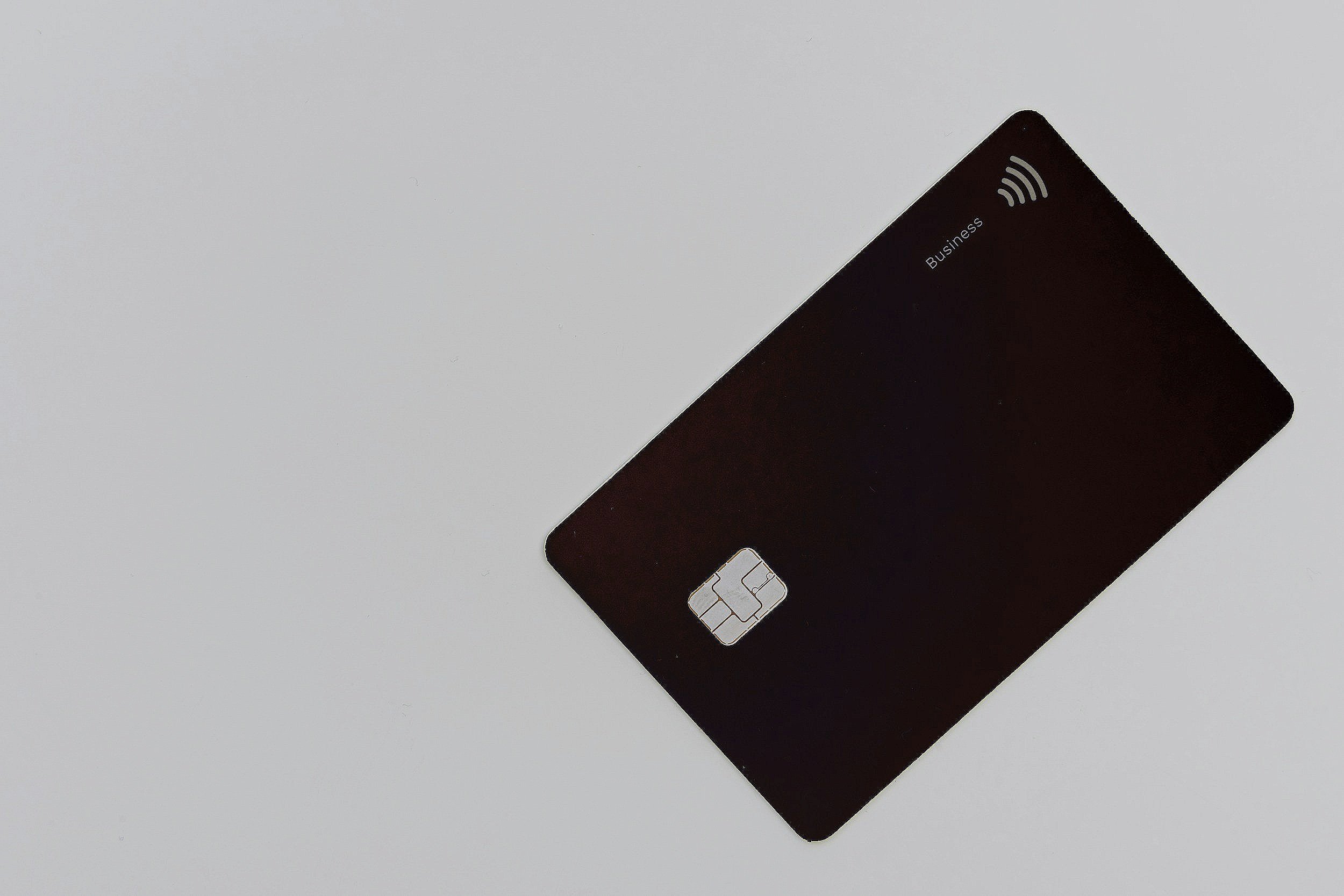
Credit Cards
Introduction to Credit Cards
Understand how credit cards work and build the habits to use them wisely to avoid debt and build your credit profile.
Continue Learning
About Stevie-Jade
What a credit card is: A credit card is a payment tool that gives temporary access to revolving credit from a bank or issuer up to a set limit, with the balance to be repaid later and interest charged if it is not cleared in full.
How credit cards developed: Modern credit cards began with Diners Club in 1950 and expanded with bank cards such as BankAmericard and Master Charge, evolving from paper and embossed plastic to chips, tap to pay and tokenised cards in digital wallets.
Why banks and retailers like them: Banks earn merchant fees, interest on unpaid balances and account fees, while retailers benefit from higher average spends and faster, guaranteed settlement through the card networks.
Difference from older store credit: Traditional lay by and store accounts tied customers to one shop and often required payment before collection. Credit cards work on global networks, pay merchants immediately and let consumers spread repayments across many purchases.
Example: A department store once required instalments to be paid before goods were collected. With a card, a customer takes the goods home immediately and repays the bank later, changing both the timing of cash outflow and the psychology of spending.
How Credit Cards Work
Borrowing at the checkout: Each card purchase authorises the issuer to pay the merchant on your behalf. That payment becomes a short term loan sitting on your card account until you repay it.
Billing cycle and due date: Transactions accumulate during a statement period of roughly thirty days. After the statement is issued you usually have another three to four weeks to pay. Paying the full statement balance by the due date preserves interest free days on new purchases.
Credit limit: The limit is the maximum balance allowed and is set using information such as income, existing debts and credit history.
Physical cards, digital wallets and BNPL: A plastic card and a digital wallet both access the same card account, with wallets storing tokenised details. Buy Now Pay Later is separate and creates individual instalment plans outside the card network.
Credit utilisation formula: A common measure of use is the utilisation rate, given by \( \text{Utilisation} = \dfrac{\text{Balance}}{\text{Credit Limit}} \times 100\% \). For example, a balance of $900 on a $6,000 limit is 15 percent utilisation.
Key Features and Terminology
APR and annual fee: The annual percentage rate is the headline interest rate applied to unpaid balances, usually compounding daily and charged monthly. Many cards also charge a fixed annual fee which increases the overall cost of holding the card.
Interest free period and grace period: An interest free period is the maximum number of days from purchase until the due date during which no interest is charged if the previous statement was cleared in full. A grace period is the extra time before a payment is marked late and does not restore interest free days if there is already an outstanding balance.
Secured and unsecured cards: Secured cards require a cash deposit that acts as collateral. Unsecured cards rely on your credit profile and income without any upfront deposit.
Cash advances: Withdrawing cash on a card usually attracts a higher rate, no interest free days and extra cash advance fees, making it one of the most expensive ways to access cash.
Average daily balance method: Many issuers calculate interest using an average daily balance. A simple version is \( \text{Interest} = \text{Average Daily Balance} \times \dfrac{\text{APR}}{365} \). For example, an average daily balance of $1,200 at 19.9 percent APR produces around $19.90 of interest over a thirty day month.
Why People Use Credit Cards
Convenience and acceptance: Credit cards are widely accepted in stores and online, allowing quick transactions and delayed payment from the cardholder.
Protections and chargebacks: Card schemes provide dispute rights, fraud protection and chargeback processes that may not apply to bank transfers or some debit card purchases.
Security holds for bookings: Hotels and car hire companies often pre authorise a sum on a credit card as a security bond. This reduces available credit but does not remove cash from the bank account unlike a similar hold on a debit card.
Rewards and extras: Some cards offer points, cashback, airport lounge access, travel insurance or extended warranties. These perks are funded by fees and merchant charges and only add value if the card is managed well.
Example: A hotel places a $300 pre authorisation on a credit card. The amount is held against the limit but the customer’s everyday bank balance is unaffected, which can help with cash management on a trip.
Risks of Credit Cards
High cost of borrowing: Credit cards are usually one of the most expensive debt products, often charging significantly higher rates than personal loans or home loans.
Compounding interest: Interest accrues on the outstanding balance each day, so carrying a balance over many months can make even modest debts expensive.
Psychological risk: Because spending is separated from the moment of payment, some people treat the card limit as extra income and lose track of how much they owe.
Compound growth of debt: A simple model for the growth of an unpaid balance is \( A = P \times \left(1 + \dfrac{r}{12}\right)^{12} \) where \(P\) is the starting balance and \(r\) is the annual rate. A $1,000 balance at 20 percent APR grows to around $1,219 over twelve months if no repayments are made.
Example: A $400 balance at 20 percent APR with only $10 paid each month falls very slowly because most of the payment goes toward interest rather than the principal.
Behaviour and Psychology
Spending patterns: Research suggests many people spend more when paying by card compared with cash because the outflow feels less immediate.
Minimum repayment anchor: Statements highlight the minimum amount due which can anchor behaviour at very low repayment levels and increase total interest paid.
Promotional incentives: Sign up bonuses, discounts and reward campaigns can encourage extra spending and card hopping if the underlying fees and rates are not understood.
Example: Two shoppers intend to spend $80 each. The cash payer stops at $80 to match the notes in their wallet, while the card user adds another $15 item, reasoning that the extra amount will barely change the monthly payment.
Credit Cards vs Other Credit Products
Personal loans: Personal loans are instalment credit with fixed terms and repayments, usually at lower rates than cards. They suit one off borrowing for a specific purpose.
Buy Now Pay Later: Buy Now Pay Later services split purchases into a small number of instalments. They often charge no interest when paid on time but can add late fees and are still a form of debt.
Debit cards: Debit cards draw directly from existing bank balance, helping people avoid debt at the cost of losing the flexibility and protections of credit.
Example: Borrowing $2,000 on a twelve month personal loan at 10 percent might cost around $200 in interest, while carrying the same $2,000 on a credit card at 20 percent for a year could cost roughly double if not reduced.
Legal and Regulatory Protections
Regulation in Australia: Credit cards are regulated under the National Consumer Credit Protection Act and Australian Consumer Law. Issuers must follow responsible lending rules and the ePayments Code.
Disclosure of costs: Laws require clear disclosure of interest rates, fees and key terms so that consumers can compare products and understand obligations.
Fraud and dispute rights: Cardholders can dispute unauthorised transactions or cases where goods are not supplied as promised. Liability depends on how quickly the problem is reported and whether security steps were followed.
Example: A cardholder spots a $250 transaction they did not make and reports it immediately. The bank investigates and, if confirmed as fraud, reverses the charge and restores the correct balance.
Impact on Young Australians
Early access to credit: Many people apply for their first card around age eighteen to book travel, shop online or build a credit history.
Long term effects: Well managed use, with on time full repayments and low utilisation, can support future borrowing for cars or homes. Missed payments or over limit use can damage credit files for years.
Example: Student A repays in full each month and keeps utilisation near 15 percent, building a positive record. Student B pays only the minimum and misses a due date, triggering fees, interest and negative marks on their credit report.
Key Considerations
Credit is not income: A credit card is borrowed money with conditions, not extra cash. Costs arise when balances are carried forward, fees apply or cash advances are used.
Three things to check: When comparing cards, look closely at the APR, all fees such as annual or international charges and the rules for interest free days and when they stop applying.
Value of education: Understanding billing cycles, utilisation, compounding interest and your rights in disputes helps you avoid surprises and use cards intentionally rather than reactively.
One sentence summary: A credit card lets you buy now and pay later but becomes expensive very quickly if the balance is not repaid in full each month.
Navigating Credit Cards

20:24
Understand how to navigate credit cards to avoid fees, interest traps and minimise your credit card debt.
-
Responsible Use
Understanding Credit Score
Managing Debt & Repayments
Interest-Free Days & Payment Cycles
Credit Card Types
Rewards & Perks
Safety & Security in Practice
Long-Term Impacts
Disclaimer: The content provided on this website, including all AWAKEN videos, notes, resources, and related materials, is for general information and educational purposes only. Nothing contained on this website constitutes, or is intended to constitute, financial product advice as defined in the Corporations Act 2001 (Cth). The information has been prepared without taking into account your objectives, financial situation, or needs. You should consider the appropriateness of the information in light of your own objectives, financial situation, and needs. We strongly recommend you obtain independent professional advice from a qualified financial adviser who is licensed by the Australian Securities and Investments Commission (ASIC) before making any financial decisions. When purchasing financial products, you should obtain and read the relevant Product Disclosure Statement (PDS) from the product issuer.